
Tarmac Patching & Asphalt Repairs Gloucestershire
Targeted tarmac patch repairs for damaged access roads, commercial car parks, private driveways, industrial yards and other asphalt surfaces throughout Gloucestershire.
Repair The Area. Not Necessarily The Entire Road.
Tarmac patching is a practical method of dealing with localised asphalt damage without automatically replacing the whole road, driveway or hardstanding.
It can be suitable for deteriorated sections, failed previous repairs, potholes and damaged areas surrounding joints or edges.
The most appropriate repair depends on the condition of the existing material, underlying construction, drainage and expected traffic.
Our Gloucestershire service covers enquiries from commercial property owners, estate managers, farms, landowners and residential customers with privately maintained surfaces.
Failed Tarmac Doesn't Always Mean Full Resurfacing.
Sections of asphalt can deteriorate while surrounding areas remain serviceable.
Where conditions allow, damaged sections can be prepared and repaired using an appropriate asphalt patching technique.
This approach may reduce disruption compared with more extensive resurfacing, depending on the area and site requirements.
VIEW POTHOLE REPAIRS →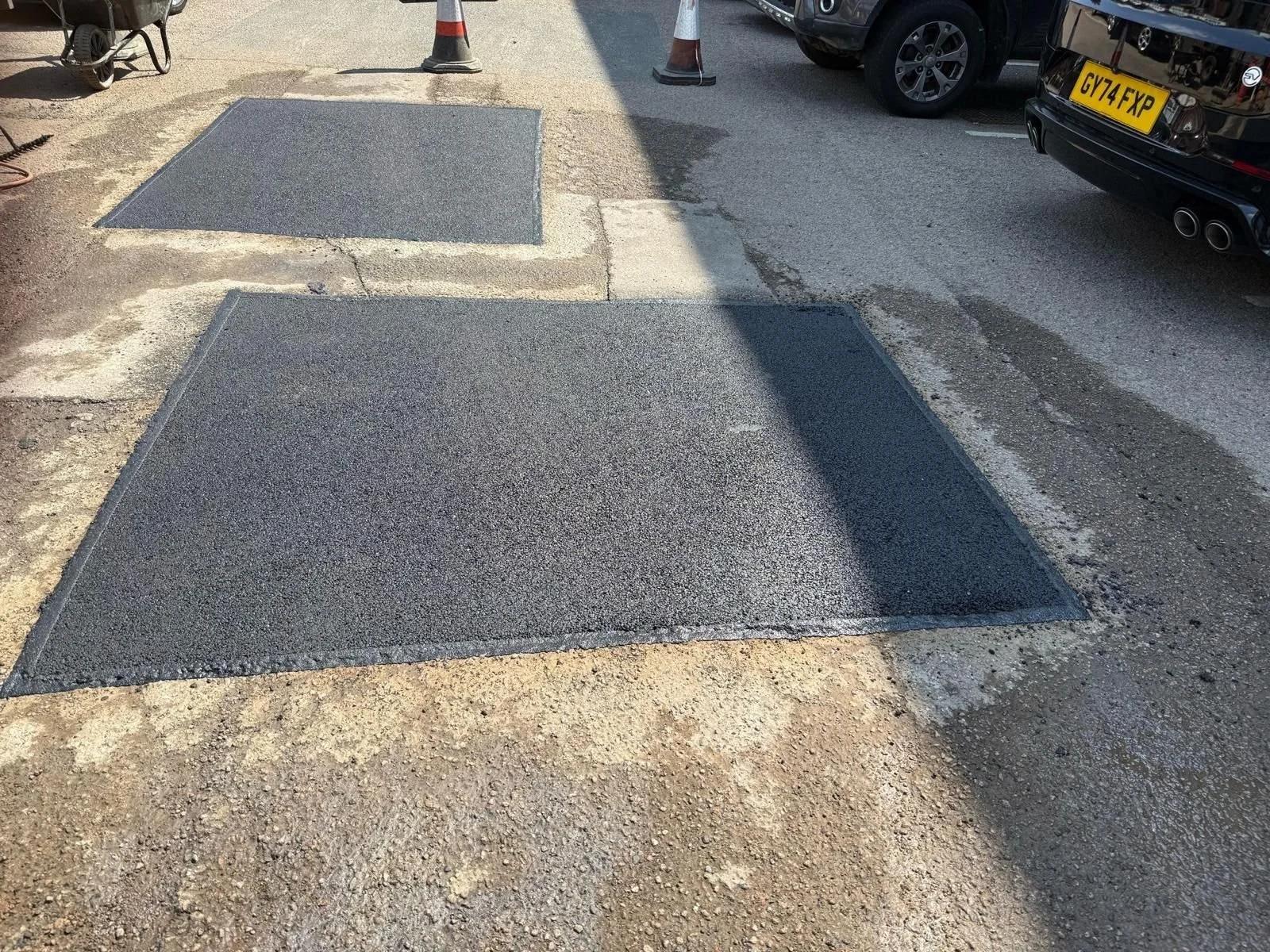
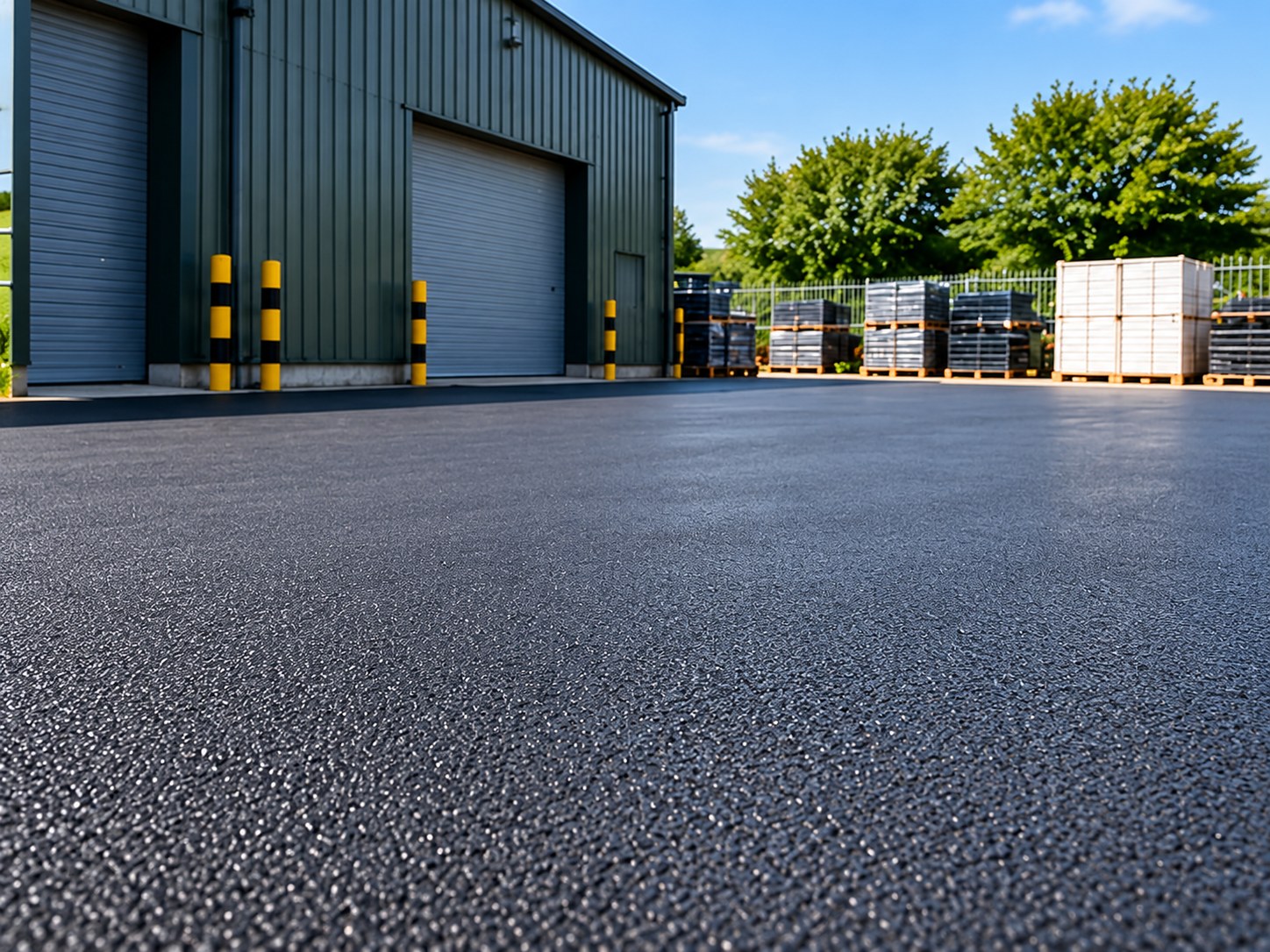
Commercial Tarmac Repairs Built Around Your Site.
Commercial asphalt surfaces can experience repeated loading, turning movements and heavy vehicle traffic.
Damaged sections may develop around entrances, loading areas, parking spaces and yard access routes.
Any proposed repair should account for traffic loading, site operation, vehicle movements and the underlying road construction.
COMMERCIAL REPAIRS →Surface Repairs For Different Environments.
Localised patching may be suitable for a variety of privately maintained asphalt surfaces.
Private Access Roads
Damaged sections of privately maintained access routes, residential roads and shared lanes.
Commercial Car Parks
Asphalt repairs around parking bays, entrances, traffic routes and turning areas.
Industrial Yards
Localised repairs for commercial hardstanding, loading areas and working surfaces.
Driveway Repairs
Damaged tarmac driveways with isolated failed sections, cracks and potholes.
Farm Access Roads
Asphalt farm entrances, rural private roads and agricultural access areas.
Estate Roads
Surface repairs within privately managed estates, grounds and property access networks.
A Repair Is Only As Good As The Surface Beneath It.
Simply covering a damaged area may not address the reason the surface failed.
Moisture penetration, a weakened base, inadequate drainage and heavy loading can all contribute to recurring damage.
Where required, repair preparation may involve removing failed material, assessing the supporting layers and reinstating the area with suitable materials.
DISCUSS YOUR REPAIR →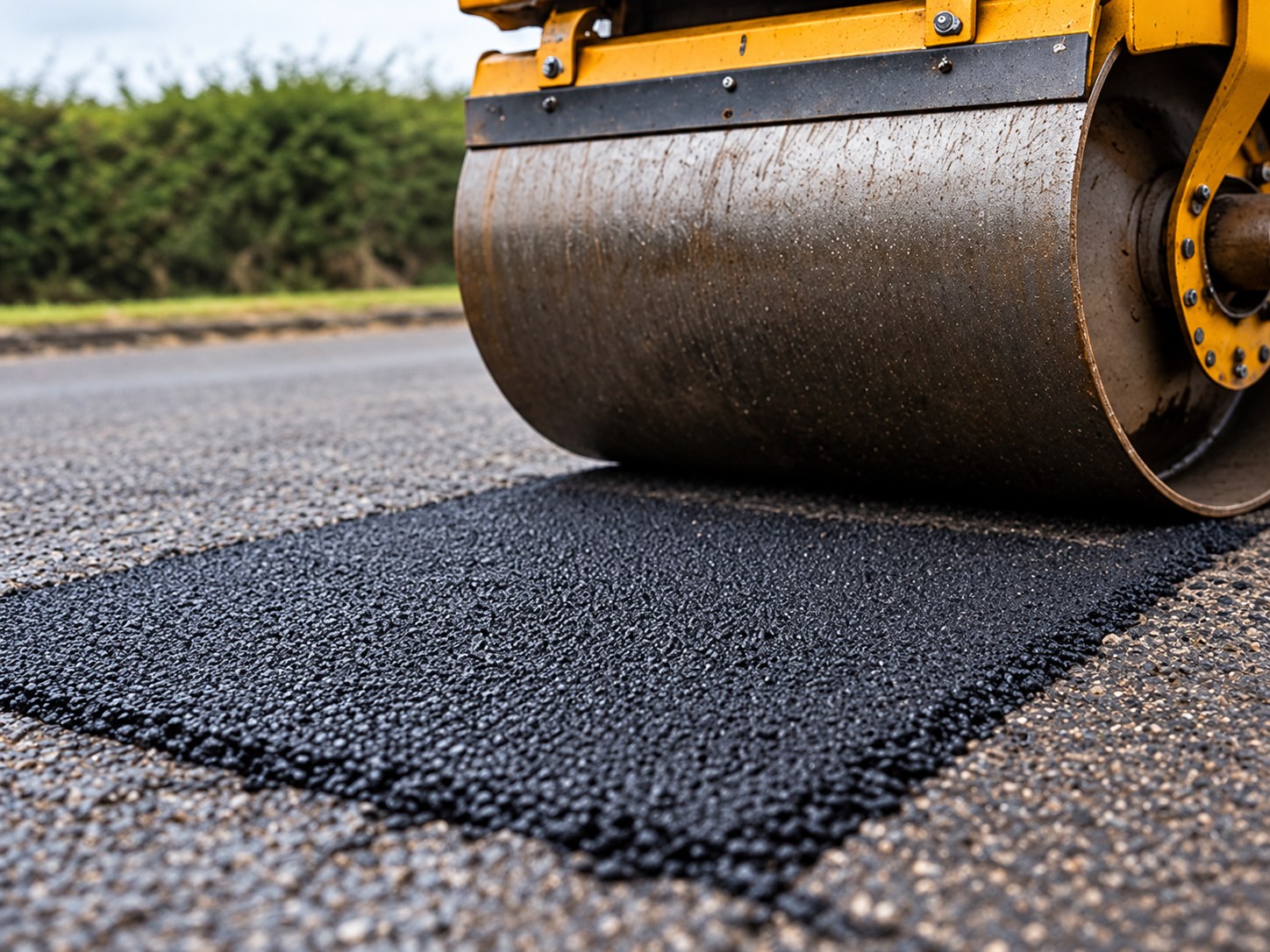
How Tarmac Patching Is Typically Carried Out.
The exact sequence depends on the surface and the specified repair method.
Assess
Identify the damaged section, surrounding condition and intended surface use.
Prepare
Remove unsuitable material, where necessary, and prepare sound repair edges.
Reinstate
Apply an appropriate patch repair system for the agreed work.
Compact
Compact and finish the asphalt in accordance with the repair requirements.
When Is Patching Better Than Resurfacing?
Localised patching can make sense when damage is limited and the majority of the existing surface remains structurally sound.
Where deterioration is widespread, several adjacent areas have failed or the supporting layers are unsuitable, more extensive repair or resurfacing may be appropriate.
The right solution is determined by condition rather than simply choosing the smallest initial repair area.
Local Tarmac Patching Enquiries Across The County.
From business premises in Gloucester and Cheltenham to private roads and rural properties near Cirencester, Stroud and Tewkesbury, we welcome enquiries across Gloucestershire.
Tarmac Patching FAQs.
What is tarmac patching?
Tarmac patching is the localised repair or replacement of damaged asphalt rather than resurfacing an entire area.
Can damaged tarmac be patched?
Often, yes. Suitability depends on the extent of deterioration, surrounding asphalt condition and stability of the underlying layers.
How much does tarmac patching cost?
Cost depends on patch size, repair depth, access, material requirements, preparation and the number of separate damaged sections.
How long does an asphalt patch last?
Durability varies with construction quality, surface preparation, drainage, traffic loading and the underlying condition.
Can you patch an existing tarmac driveway?
Localised patching may be appropriate for an existing tarmac driveway where damage is limited and the supporting construction remains suitable.
Is patching suitable for heavy commercial vehicles?
It can be, but the repair design must account for vehicle loading, turning forces and the structural condition of the existing road or yard surface.
Damaged Tarmac? Get It Assessed.
Tell us about your road, car park, driveway or yard and request a quotation for tarmac patching in Gloucestershire.
REQUEST YOUR QUOTE →